
This week in MathOnco 373
Until July... thank you TWiMO team!


“This week in Mathematical Oncology” — May 28, 2026
> mathematical-oncology.org
From the editor:
As is our custom, TWiMO will take a break for the month of June and resume on Thursday, July 2nd. Until then I’d like to take a moment to thank our team of volunteers who maintain the resources for both TWiMO and The Mathematical Oncology blog!
This year we added two new members to the blog’s Editorial Board team: Kathleen Wilkie (Toronto Metropolitan University) and Sarah Brüningk (University of Bern). You can browse the full team here.
Enjoy,
Jeffrey West
jeffrey.west@moffitt.org
TWiMO is brought to you by Maximilian Strobl, Sarah Groves, Veronika Hofmann, Yifan Chen, Franco Pradelli, and Sandy Anderson. Find out more about the team here.

Estimating tumour immune infiltration: methodological convergence across histology and spatial technologies.
Bian B, Cao Y, Yang JYH.Adaptive therapy and its challenges
Jinling Wu, Maximilian A R Strobl, Jacob G ScottCan public good producing subclones invade a population of non-producers?
Svyatoslav Tkachenko, Michael Hinczewski, Christopher D McFarlandAn AI system to help scientists write expert-level empirical software
Eser Aygün, Anastasiya Belyaeva, Gheorghe Comanici, …, Lizzie Dorfman, Shibl Mourad & Michael P. BrennerAccelerating scientific discovery with Co-Scientist
Juraj Gottweis, Wei-Hung Weng, Alexander Daryin, T…, Annalisa Pawlosky, Alan Karthikesalingam & Vivek NatarajanA multi-agent system for automating scientific discovery
Ali Essam Ghareeb, Benjamin Chang, Ludovico Mitchener, …, Silvia C. Finnemann, Michaela M. Hinks & Samuel G. RodriquesModel-Informed Dosing Strategies for Epcoritamab Monotherapy in Relapsed or Refractory Large B-Cell Lymphoma
Xiaozhi Liao, Tommy Li, Steven Xu, Mohamed-Eslam F. Mohamed, Mahipal Sinnollareddy, Manish Gupta, Monica Wielgos-Bonvallet, Andrew J. Steele, Mariana Sacchi, Yanguang CaoEnsemble Optimal Control for Managing Drug Resistance in Cancer Therapies
Alessandro Scagliotti, Federico Scagliotti, Laura Deborah Locati & Federico SottotettiOptimization of Immune Checkpoint Blockade via a Multiscale Model System
Anne M. Talkington, Anthony J. KearsleyPersonalized optimal dosing strategies for anticancer chemotherapy using mathematical modeling
Yunil Roh, Sooyoun Choi, Yong Dam Jeong, Jong Hyuk Byun & Il Hyo JungMultilevel selection in multi-type populations
Amanda de Azevedo-Lopes , Arne TraulsenDecoding cellular population dynamics through mechanistic modelling and statistical data analysis
Nissrin Alachkar, Nicholas Kwasi-Do Ohene Opoku, Nicholas A. M. Monk & Kevin Thurley
Cancer Evolvability Determines Therapy Outcomes.
Bhattacharya R, Bukkuri A, Gatenby RA, Brown JS.Modeling tumor cell heterogeneity and plasticity in adaptive therapy
Rui Yue, Chenghang Li, Jinzhi Lei
Multiomic State-Transitions Reveal Post-Treatment Transcriptome Desynchronization in Acute Myeloid Leukemia
Jennifer Rangel Ambriz, Ziang Chen, Yu-Hsuan Fu, David Eugene Frankhouser, …, Guido Marcucci, Russell C. Rockne, Ya-Huei Kuo

Large Language Models for Science and Research: A Practical Guide
James Dewar: Large language models emerged as mainstream tools in 2022, but reasoning-capable models released in late 2024 through 2025 represented a step change in scientific utility, achieving PhD-level performance on domain-specific benchmarks and reliably completing autonomous tasks requiring hours of human effort. Yet the unbounded nature of these systems, combined with legitimate privacy concerns and rapidly shifting capabilities, makes it difficult for researchers to identify an access point and establish safe practices. This guide provides a practical framework for engaging with reasoning LLMs across scientific disciplines. I first describe what these models are and how they work, including core concepts (statelessness, context windows, prompt engineering) that inform productive use. I then introduce the “dual stance,” a mental framework for treating LLM outputs simultaneously as high-quality intellectual contributions and as unverified claims requiring systematic checking.A Survey on Hallucination in Large Language Models: Principles, Taxonomy, Challenges, and Open Questions
Lei Huang, Weijiang Yu, Weitao Ma, Weihong Zhong, Zhangyin Feng, Haotian Wang, Qianglong Chen, Weihua Peng, Xiaocheng Feng, Bing Qin, Ting Liu
AI hallucinations have recently received significant attention in the media and in science. Less attention is devoted to research on this phenomenon and to techniques to reduce it. This is an excellent review that, using a comprehensible but precise language, makes the point on this rapidly evolving topic.What’s the Point of Theory in Biology?
Niko McCarty

The newsletter now has a dedicated homepage where we post the cover artwork for each issue, curated by Maximilian Strobl, Veronika Hofmann, Yifan Chen, and Sarah Groves. We encourage submissions that coincide with the release of a recent paper from your group. This week’s artwork:
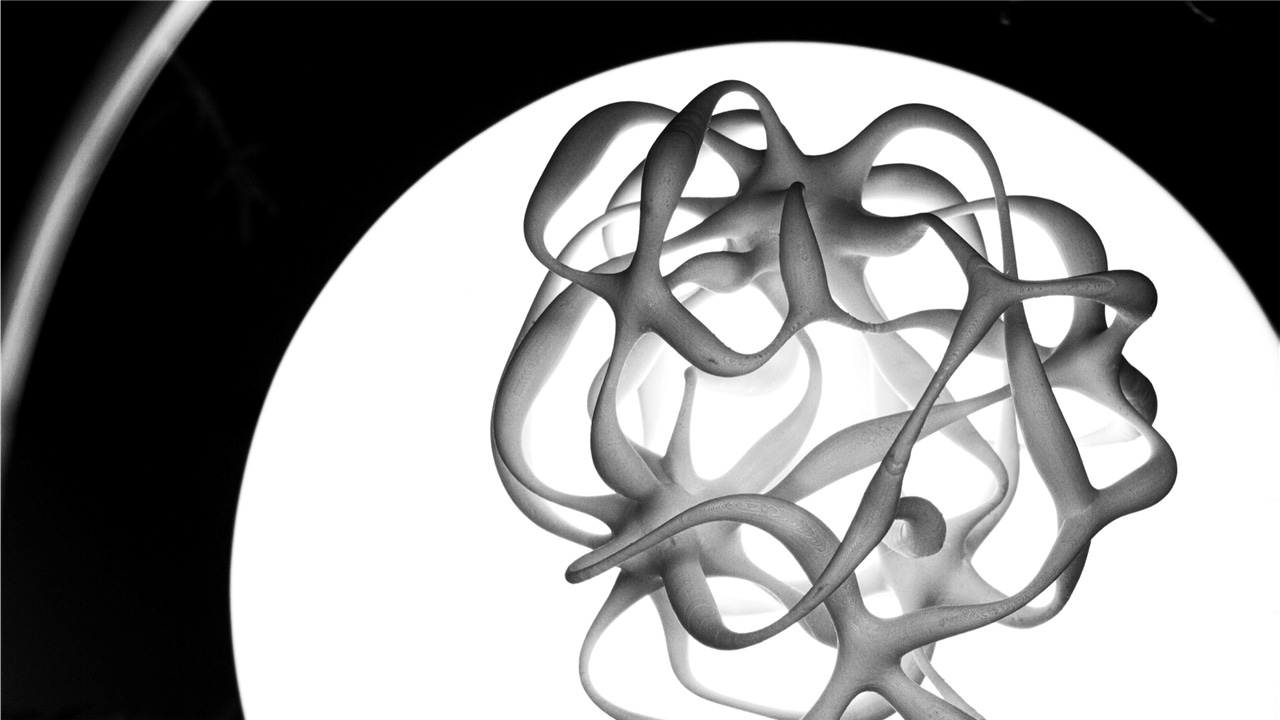
Based on the paper: Surface optimization governs the local design of physical networks published in Nature
Artist: Péter Puklus (homepage), with Xiangyi Meng, Benjamin Piazza, Csaba Both, Baruch Barzel & Albert-László Barabási (@barabasi, Instagram, Facebook)
Caption: This artwork visualizes the hidden geometry of physical networks from brain wiring to vascular systems revealing that their structure is shaped by more than simple efficiency. While traditional theories assume these networks minimize total wiring length, our work shows that reality is more complex as local branching patterns consistently defy those predictions. By considering the full three-dimensional form of connections, we uncover a surprising link to concepts from theoretical physics, where minimizing surfaces maps onto high-dimensional models. Using this, we can predict distinctive features such as trifurcations and characteristic angles, which closely match real biological and physical networks. Our study also highlights the importance of orthogonal sprouts, which are crucial structures that enhance connectivity and function. In summary, our findings suggest that the architecture of life’s networks is governed by deeper geometric principles than previously thought.

Visit the mathematical oncology page to view jobs, meetings, and special issues. We will post new additions here, but the full list can found at mathematical-oncology.org.
1. Jobs
Approximate current subscriber count, N:
N(t) = 0.808t+80 (where t = days since Dec. 1st, 2017)